
What does “resonance” mean in a healing context? Natural resonant healing solutions can refer to very different approaches, from sound and vibration, such as singing bowls, to bio-informational healing, which focuses on the body’s proposed informational field. Because the terminology overlaps, it helps to understand what a method involves and what its claims are based on.
Your caution is well placed. Some studies have explored sound and vibration for specific concerns, including stress or pain, but findings for one method don’t validate every frequency-based claim. Evidence remains limited for many approaches, and resonance-based therapies shouldn’t be presented as cures for disease. Understanding the proposed mechanism and the limits of the research can help you assess your options with greater confidence.
This article explains the different meanings of resonance, separates established explanations from claims that need more evidence, and outlines what a personalized Quantum Resonant approach involves. At the Quantum Resonant Healing Center, Dr. Lonnie Meisel’s proprietary, frequency-based approach includes relaxed Quantum Resonant Testing and a personalized Quantum Resonant Protocol. Everything begins with you, with attention to your individual needs and privacy, without promises of guaranteed results.
Key Takeaways
- Natural resonant healing solutions can describe different methods, so identify the mechanism behind an approach before considering its claims.
- Separate established principles, such as sound vibration, from claims about health outcomes that require stronger evidence.
- Clarify your concern and whether you’re seeking a sound experience, an emotional framework, or an individualized assessment.
- Review what a method claims to address, what evidence supports those claims, and what realistic expectations look like.
- Dr. Meisel’s Quantum Resonant approach offers personalized assessment through a relaxed Quantum Resonant Testing session at the clinic or your home.
Natural resonant healing solutions: what does resonance mean?
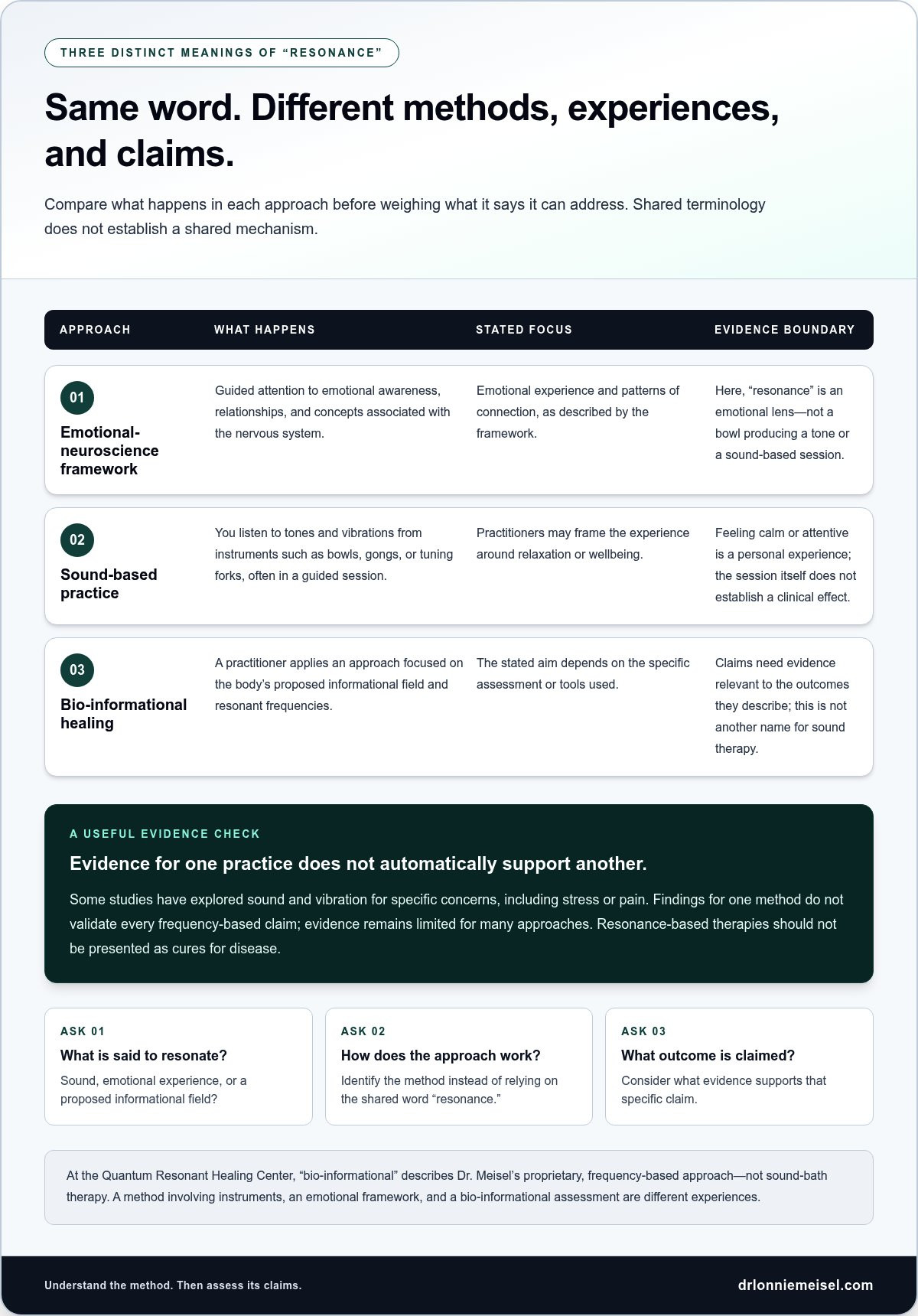
In wellness settings, “resonance” can describe sound and vibration, emotional connection, or a proposed informational process. The word is shared, but the methods behind it are not necessarily related. Evidence for one practice cannot automatically support another. Start by asking what is said to resonate, how the approach works, and what outcome it claims to support.
In physics, resonance describes a relationship in which a system responds strongly to a particular frequency of vibration. A swing is a simple example: when pushes arrive in time with its natural movement, the swing travels higher. In wellness language, however, resonance may be used more broadly or metaphorically. When comparing natural resonant healing solutions, familiar terminology alone doesn’t establish a shared mechanism.
Acoustic resonance and sound-based practices
Strike a singing bowl and its material vibrates, moving the surrounding air and producing sound. A sound bath centers on listening to sounds and vibrations made by instruments such as bowls or tuning forks. The word “bath” describes the experience of being surrounded by sound; it doesn’t mean the sound is a medical treatment. Enjoying a session or finding it calming does not, by itself, show that sound exposure treats or cures a health condition.
Acoustic resonance describes vibration and sound; emotional resonance describes a felt human connection, while bio-informational resonance refers to a proposed informational process. Evaluate these meanings on their own terms. A clear account of Energy medicine can help distinguish practices that refer to measurable physical energy from those that propose forms of energy not established as physically observable.
Emotional and bio-informational uses of resonance
Sarah Peyton’s emotional and neuroscience-oriented framework uses resonance to explore emotional experience and the way people relate to one another. In this context, the term is not about a bowl producing a resonant tone. It describes an emotional lens informed by neuroscience concepts. That framing is distinct from sound-based practices and from approaches that claim to assess a person’s energetic or informational state.
Bio-informational healing is a holistic approach focused on the body’s informational field and resonant frequencies, rather than only chemical processes. This is a specific use of resonance, not a synonym for sound therapy. At the Quantum Resonant Healing Center, the term describes Dr. Meisel’s proprietary, frequency-based approach, not sound-bath therapy. The distinction helps set expectations: a session involving instruments, an emotional framework, and a proprietary bio-informational assessment are different experiences, even if each uses the language of resonance.
When you encounter a resonance claim, identify the actual method before judging what it might offer. Is the practitioner working with audible sound, discussing emotional patterns, or describing an informational field? Naming the method makes it easier to understand what is proposed and consider the supporting evidence without treating all resonance-based practices as interchangeable.
How natural resonant healing methods differ in practice
Methods grouped under natural resonant healing solutions can look quite different in a session. Some use audible sound, others guide emotional reflection, and bio-informational healing works from a proposed informational-field model. Comparing what happens in practice helps you understand an approach before weighing what it claims to address.
| Approach | What happens | What it claims to address |
|---|---|---|
| Emotional-neuroscience framework | Guided attention to emotional awareness, relationships, and concepts associated with the nervous system. | Emotional experience and patterns of connection, as described by the framework. |
| Sound-based practice | You listen to tones and vibrations produced by instruments such as bowls or gongs, often in a guided session. | Practitioners may frame the experience around relaxation or wellbeing; the session itself does not establish a clinical effect. |
| Bio-informational healing | A practitioner applies an approach focused on the body’s proposed informational field and resonant frequencies. | The method’s stated aim depends on the specific assessment or tools used; claims require evidence relevant to those outcomes. |
What happens in sound-based and emotional approaches?
A sound bath is a guided listening experience. You may hear bowls, gongs, chimes, or other instruments, with the session centered on their tones and vibrations. A participant’s report of feeling calm or attentive describes a personal experience, not proof that a health condition has improved.
Emotional frameworks take a different route. They may invite you to notice feelings, relational experiences, or ideas about nervous-system responses. Sound exposure and emotional reflection are not one shared treatment mechanism, so neither should inherit the other’s evidence. An engaging experience can be meaningful without demonstrating a clinical outcome.
What is bio-informational healing?
Bio-informational healing is a holistic approach that treats the body’s informational field and resonant frequencies rather than only chemical processes. That definition describes the framework; it does not establish that the proposed field or a claimed health effect has been clinically validated. To compare approaches fairly, distinguish the theory from the steps a practitioner takes and the outcomes being claimed.
At the Quantum Resonant Healing Center, the term refers to Dr. Meisel’s proprietary, frequency-based approach, not sound-bath therapy. Quantum Resonant Remedies are non-pharmaceutical, bio-informational tools. The center describes them as designed to support the intestinal lining’s resonant state and reduce inflammation; that stated purpose should not be mistaken for independently established clinical evidence. The article “Quantum Resonant Remedies Explained” explores the remedies in more detail.
If you’re considering this personalized approach, the center’s Quantum Resonant care offers a point of reference for understanding its method and terminology. Keeping the experience, proposed mechanism, and evidence distinct lets you assess what feels aligned with your needs without treating different practices as interchangeable.
What science can, and cannot, say about resonant healing
A plausible explanation is not proof that a method improves health, and a meaningful personal experience is not the same as a demonstrated clinical outcome. This distinction lets you remain open to an approach while evaluating what is known. Sound vibrations are physical phenomena; claims that a particular frequency changes a health condition require evidence for that specific method and outcome.
Evidence must be assessed for each method and each claimed outcome; findings about one practice cannot validate every approach described as resonant. Someone may report feeling calm after a sound session. That experience can be real and valuable to them, but it does not alone show that the session treats anxiety, pain, or another condition. Those are separate claims and need suitable clinical evidence.
How to read claims about frequency and health
When you encounter a statement about frequency, first identify what kind of statement it is. Does it describe a physical process, such as an instrument vibrating and creating sound? Does it report someone’s experience, such as feeling more relaxed? Or does it claim a clinical outcome, such as improving a diagnosed condition? Each requires a different standard of support.
Then consider the proposed rationale and the evidence separately. A practitioner may explain a method using terms such as “resonance,” “energy,” or “nervous system.” These words can describe a theory or framework, but their scientific tone does not establish that the method works. Evidence for a specific outcome should relate to the actual method, the people studied, and the outcome measured. Findings from sound-based practice, for instance, cannot automatically establish the effectiveness of an emotional framework or a bio-informational assessment.
For natural resonant healing solutions, this distinction is especially useful because the label may cover approaches with different mechanisms. A clear explanation of what happens in a session is a starting point, not proof of a health benefit.
What responsible language about outcomes looks like
Responsible descriptions distinguish a proposed purpose from a verified effect. Phrases such as “is intended to support” or “the center describes this as” attribute a method’s rationale without presenting it as established clinical fact. By contrast, statements that promise to cure, prevent, or reliably reverse a condition need strong, relevant evidence and should not be assumed from a general theory of frequency.
The Quantum Resonant Healing Center describes its proprietary approach in frequency-based terms. That description explains the center’s framework; it does not, on its own, demonstrate that an assessment or remedy can diagnose or treat a medical condition. Keep that boundary clear when considering any personalized approach, including one that feels attentive or meaningful to you.
Use complementary approaches with informed expectations. Don’t treat a proprietary assessment or remedy as a substitute for conventional diagnosis or treatment, and don’t delay care for a health concern while evaluating it. Discuss decisions with your existing medical team, particularly if you’re considering changes to a current care plan. You can value a personal experience while still asking what evidence supports the specific outcome being claimed.
How to assess whether a resonant approach fits your needs
A useful decision starts with your needs, not with a broad promise about frequency or healing. These four steps can help you assess whether an approach suits your goals, preferences, and wider care.
- Clarify the concern. Describe what you hope to address in everyday language, without assuming a diagnosis. You might be seeking a calming experience, support in understanding emotional patterns, or a more individualized wellness assessment.
- Identify the method. Find out what the session involves. Is it guided listening with instruments, an emotional framework, or an individualized assessment? Consider whether the setting, activities, and time commitment feel appropriate for you.
- Review the claims. Separate the method’s proposed rationale from evidence for a specific outcome. Ask what the approach is intended to do and what evidence supports that claim, rather than relying on scientific-sounding terms alone.
- Set expectations. Decide what you would consider a helpful experience and when you would reassess your choice. Avoid treating a possible benefit as a promised result.
Questions to clarify before choosing an approach
Be specific about your aim. Are you looking for a sound experience, an emotional framework, or an individualized assessment? Then consider whether the method matches your preferences for setting, interaction, and privacy. For private care, practical fit matters too: think about how much time you can set aside, how you prefer to communicate, and what health information you’re comfortable discussing. A clear question about realistic outcomes helps keep expectations grounded.
If your wellness goals are shaped by a demanding professional life, you may also find a useful perspective in quantum healing for high performers. Individualized goals can help you focus a conversation on what matters to you, while distinguishing personal priorities from claims about clinical results.
How to keep expectations and care coordinated
Keep your existing care in view. Share relevant health context with your clinicians, including any complementary approach you’re considering, so discussions about your health remain coordinated. Don’t stop prescribed care or change a treatment plan because of a resonant approach without discussing that decision with the clinician responsible for your care.
You can also keep a simple record of your experience: note when you participated, what the session involved, and any changes you observed in your own wellbeing. This is not a substitute for clinical assessment, but it can help you describe your experience clearly and raise questions. If something concerns you or your health changes, discuss it through an appropriate clinical relationship rather than relying on a wellness session to interpret the change.
For a discreet, personalized conversation about your wellness priorities, explore Dr. Meisel’s approach. A discussion can help you understand how an individualized path relates to your goals and existing care.
Dr. Meisel’s Quantum Resonant approach: personalized next steps
The Quantum Resonant Healing Center is Dr. Lonnie Meisel’s setting for personalized, proprietary care using a frequency-based approach. This is one distinct interpretation of natural resonant healing solutions, separate from sound-bath practices. Understanding the process can help you decide whether its format and approach align with your needs. The assessment and any proposed plan should be understood within their stated scope, not as a guarantee of a particular health outcome.
What Quantum Resonant Testing involves
Quantum Resonant Testing is a diagnostic session conducted in a relaxed atmosphere. It can last 1-3 hours and may take place at the clinic or at your home. The session is part of the center’s proprietary approach. Its setting and name describe the process, but don’t establish that it confirms a particular diagnosis. You can use the session to understand how the assessment is conducted and what its findings are intended to inform.
How personalized care is organized
Before the initial discovery consultation, a Pre-Exam Consultation gives patients the opportunity to email lab reports and medical records to Dr. Meisel. This preparatory step provides relevant background for the conversation. Consider which information relates to your goals and what questions you want to discuss, while keeping your existing clinicians involved in decisions about your health.
Following assessment, the Quantum Resonant Protocol is a personalized treatment plan that includes easy-to-follow instructions and Quantum Energized formulas to promote healing. It is designed around the individual rather than presented as a one-size-fits-all plan. As with any proprietary approach, distinguish the plan’s rationale and intended purpose from evidence of a specific clinical effect. It should not replace conventional diagnosis or treatment.
Personalization also includes the experience of care. Consider your preferred setting, the time you can dedicate to an appointment, how you prefer to communicate, and your expectations for privacy and discretion. These practical considerations can help you decide whether private, attentive care suits your circumstances. The VIP Concierge Guide offers a related perspective on holistic concierge care and how individualized wellness goals can shape the experience.
If you’re considering a personal appointment, explore time with Dr. Meisel and learn how the Quantum Resonant approach may fit your priorities. A conversation can clarify the process and its intended role, without promising a particular result.
Choose a Next Step That Reflects Your Priorities
As you consider natural resonant healing solutions, let curiosity and discernment work together. You don’t need to resolve every scientific question before deciding what matters to you, but you deserve a clear explanation of a method’s intended role and the limits of its claims. Consider what would help you feel informed and comfortable as you explore your options. Your preferences, questions, and expectations can guide that process.
A private conversation can help you explore whether an individualized approach aligns with your priorities. Bring forward the outcomes you hope to support, the questions you still have, and any boundaries that matter to you. Thoughtful care should make room for your perspective and leave you better informed, without pressure to expect a guaranteed result.
When you’re ready to learn more, view Dr. Meisel’s personalized approach. Take the next step by exploring a personal appointment with Dr. Meisel and discussing your wellness priorities in a discreet setting.
Frequently Asked Questions
Can natural resonant healing solutions replace conventional medical care?
No. Natural resonant healing solutions shouldn’t replace conventional medical care. Don’t stop prescribed treatment or delay needed medical attention because you’re exploring a complementary approach. The Quantum Resonant Healing Center provides personalized holistic services, not emergency services or insurance-based primary care. Coordinate health decisions with your existing clinician, especially if symptoms change or you’re considering a change to your treatment plan. This keeps complementary choices alongside appropriate medical guidance.
How long does Quantum Resonant Testing take?
Quantum Resonant Testing takes 1-3 hours. It is the center’s proprietary diagnostic session, performed in a relaxed atmosphere at the clinic or at your home. Its duration and setting describe how the session is organized; they don’t guarantee a particular finding or health outcome. Allow for the stated session time and bring any questions about the assessment into your care discussion.
Can Quantum Resonant Testing take place at home?
Yes. Quantum Resonant Testing may take place at the clinic or at your home. The session is intended to be relaxed and lasts 1-3 hours. Choose the setting where you’d feel most comfortable having a focused conversation about your wellness concerns.
What should I share before my first discovery consultation?
Before your initial discovery consultation, the Pre-Exam Consultation is a preparatory meeting where you email Dr. Meisel your lab reports and medical records. These materials provide health information for the initial discussion. Share relevant materials that give context for your questions and goals.
Are Quantum Resonant Remedies pharmaceutical products?
No. Quantum Resonant Remedies are non-pharmaceutical, bio-informational tools. The center describes them as designed to support the intestinal lining’s resonant state and reduce inflammation; this stated purpose isn’t a guarantee of results or proof that they’re appropriate for every person. They don’t replace prescribed medication or individualized medical advice. Discuss questions about a remedy and your health context with your existing clinician before making care decisions.
Is a resonant healing approach suitable for everyone?
There isn’t a universal answer. Whether an approach suits you depends on your health context, goals, preferences, and the specific method, such as a sound-based practice or individualized assessment. No approach should be treated as a guaranteed solution. If you have urgent symptoms, seek appropriate emergency care. Before changing treatment or adding a complementary method to your care plan, discuss the decision with your existing clinician.


